Features
April 10, 2026

We’ve all heard the debate. AI will change everything in music, or it will ruin creativity. We build tools that musicians use every day, so instead of guessing, we asked them directly how they feel about AI in their creative process.
We surveyed 1,200 musicians who actively use Ultimate Guitar, MuseScore, MuseHub, and Audacity, across different skill levels and age groups, to get a clearer picture.
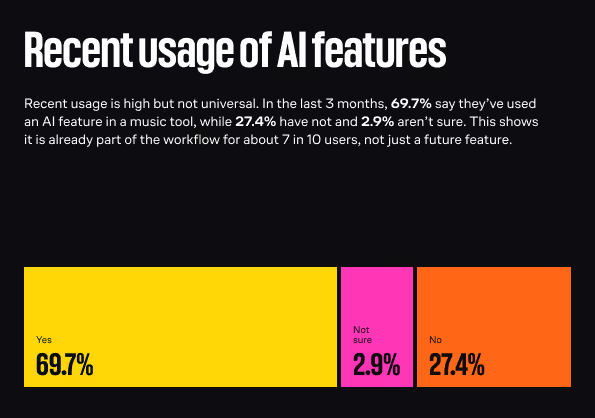
78% of musicians are open to AI tools, and 70% are already using them. Sounds like AI is taking off, but in reality that adoption comes with clear boundaries.
The largest group of musicians wants AI for technical tasks and practice support at 28%. 23% limit it to technical cleanup only, for example, like Soap Voice Cleaner. Another 21% accept suggestions but not generation. Only 18% are open to AI helping with generating music or compositions from scratch and even then only with guidance and full editability. This means that 82% of respondents are against music generation. But in contrast, just 7% say AI has no place in their workflow.
Musicians are not rejecting AI outright, but they resist the idea of losing control over their work. When asked what would make them trust and actively use these tools, the same conditions appear consistently.
93% prefer more control even if slower. Most common view: “AI can be useful, but I want clear control over what it does” (36%).
43% want clear labeling of changes, 39% want the ability to undo and compare. 32% would refuse a feature if it is unclear what it changed.
42% demand explicit licensing terms. Unclear copyright is a dealbreaker for 34% — surprisingly low perhaps, from those who are most likely to profit from creativity.
41% reject training on others’ work without permission, 40% reject copying artist styles without consent.
The most acceptable features are cleanup (70%), practice help (68%), and transcription (58%). Lyrics (37%) and auto-finishing (32%) face strong resistance.
81% want clearer industry standards and transparency (47% strongly agree). 55% require AI labeling, 53% want changelogs.
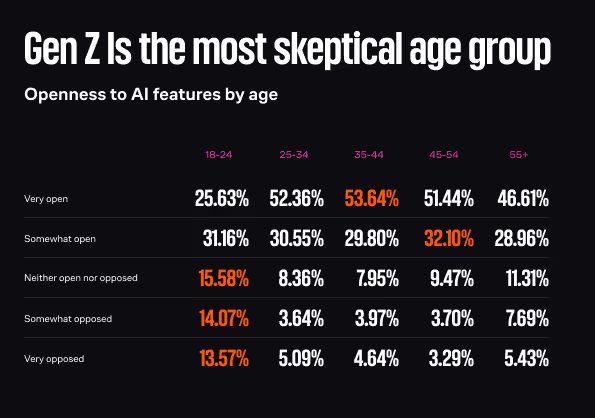
Across the survey, the youngest group of musicians stands out as the most cautious about AI in music. Respondents aged 18–24 are the least likely to describe themselves as “very open” to AI features and show the highest level of opposition at 28%. In older age groups, between 47% and 54% say they are very open.
This caution does not appear to be a question of awareness. 43% percent describe themselves as somewhat familiar with AI in music tools and 31% say they are very familiar.
This group shows the highest level of concern at 26% and the highest frustration at 21%, while also being the least excited at 14%. By contrast, musicians aged 25–54 are the most enthusiastic. Between 36% and 42% in these groups say they are excited about AI in music tools, and frustration levels remain low at 3% to 6%. The 55+ group tends to lean curious rather than excited (41%).
The takeaway is pretty clear. Musicians are open to AI, but only on their terms. They’re fine with tools that support their work, but not ones that take over.
Control, transparency, and respect for authorship will be the baseline for AI in the arts. This is already shaping how we approach product development at Muse Group, with a focus on tools that support the creative process rather than override it.

.avif)